Why is Nutrition Important for us as Swimmers?
- Provides fuel for us at training & competitions, while allowing us to recover quicker & more effectively
- Plays a critical part in the overall health & development of us as individuals
- Helps us build a stronger immune system, ready to fight off illness & infection, as well as reducing the duration when we get ill
- Without adequate nutrition, you may experience a decrease in performance, low energy levels, and poor recovery
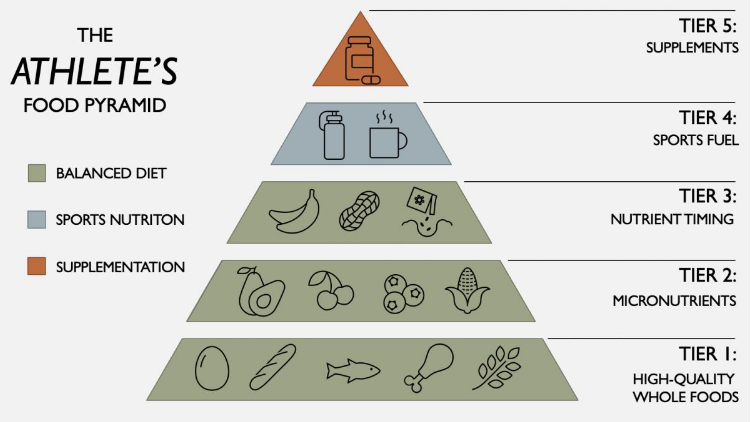
Food for Fuel
Nutrient type: Carbohydrates & Fats
Carbohydrates:
- Main source of fuel
- Used at effort levels >70% (high intensity)
- Makes up around 60% of overall intake
- Starches – Used by your body slowly to provide long lasting energy. Examples include pasta, rice, bread, couscous, oats, and potatoes, preferably choosing wholegrains
- Sugars – Provide quick energy. Examples include fruits such as berries, melon, pineapple ect, fruit juices, smoothies, and honey
Fats:
- Secondary energy source
- Used at effort levels <70% (low intensity)
- Makes up around 25% of overall intake
- Examples include fish, avocados, olives, and nuts
Food for Recovery
Nutrient type: Protein
- Rebuild and repair muscles
- Make up around 15% of overall intake
- Examples include meats such as beef, chicken, and turkey (leaner options better), fish, dairy, and eggs, as well as plant-based sources such as beans, lentils, and tofu
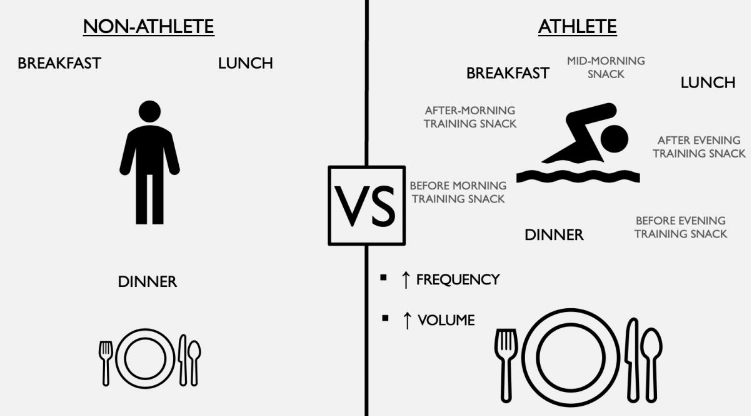
Post Training Snacking
- Great for replacing lost energy stores (through quality carbohydrates), promote muscle recovery (through good protein sources), and rehydrate you (with electrolytes)
- Ideally your snack should have a 1:3 ratio of protein to carbohydrates
- Bigger athletes who have more muscle mass will require a larger snack
- Examples include nuts and seeds paired with fruit, smoothies & bars (preferably home-made), and chocolate milk
Sports Drinks
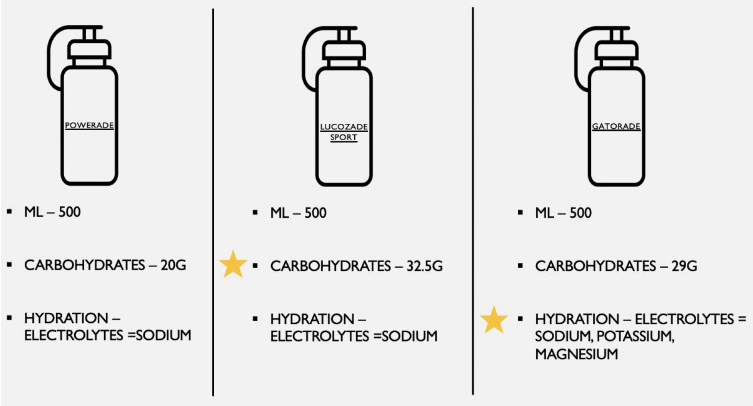
- High in both carbohydrates (to reduce fatigue) and electrolytes (to increase hydration)
- Can delay the onset of fatigue
- Only necessary during training sessions lasting more than 45mins or competitions
- Sports drinks should be used where carbohydrates will be the main fuel source (effort level of >70%)
Comparison of the leading sports drinks
Pre-Training Snacking
Food choices will usually depend on how far away your session is:
- >90 minutes – Slower release carbohydrates. Examples include crackers & toast (preferably wholegrain), or oat-based bars
- 30-60 minutes – Quicker release carbohydrates, such as fresh or dried fruits, and fruit juices or smoothies
- <30 minutes – Sipping on a sports drink
- These snack foods or drinks should be ideally quick to make and easy to take with you on the go
Eating at a Competition
- Slow-release carbohydrates during breakfast, lunch, and dinner i.e., oats, rice, pasta, bread (preferably wholegrains). Ideally this should be a few hours before your first race
- Consume quick release carbohydrates such as carbohydrate-based snack bars, dried fruit, juices, and smoothies throughout the meet & between races
- Keep majority of your protein intake to lunch & dinner time, due to high protein foods tending to take longer to digest
- Make sure you always bring more food than needed
- Always stick to familiar foods
Supporting your Overall Health
Issues with meeting micronutrient intake:
- Not eating enough food
- Diet lacking variety
Consequences of not meeting micronutrient needs:
- Low energy levels
- Developmental & growth issues
Main micronutrients people often struggle to meet:
- Calcium. Examples are dairy products, leafy green vegetables, and fortified milk alternatives
- Iron (which is especially important for females during development and onwards). Examples are red meat, and some leafy green vegetables such as spinach. Foods high in vitamin C have been found to enhance plant-based iron absorption
- Zinc. Examples are dairy products, red meat, and beans
- Vitamin B12. Examples are dairy products, red meat, and fish
- Vitamin D. Predominantly found from the sun, with a few food sources such as eggs, salmon, and mushrooms having small amounts. However, due to there being very little food sources of Vitamin D, it is advised that all individuals should be taking a Vitamin D supplement during the autumn/winter months when there is a lack of sunlight. It is the only supplement currently that we advise to all individuals
Preventing Illness & Infection
Main micronutrients to aid our immune system, while preventing illness & infection from occurring or reducing its duration:
- Vitamin C – Prevents new infections from occurring and shortens their duration. Examples are oranges, kiwis, blueberries, and broccoli
- Vitamin D – Prevents infections from occurring and shortens their stay. Examples are salmon, eggs, and mushrooms. However, supplementation is often required in the autumn/winter months
- Zinc – Aids in the production of new immune system cells. Examples are red meat, dairy products, and beans
- Selenium – Prevents infections from occurring. Examples are – Brazil nuts, pasta, and some fish such as tuna and halibut
Other Interventions to Aid Illness & Infection
- Tiredness – Sleep. Find ways to aid your sleep, such as a warm bath before bed or eating a kiwi, which has antioxidants that aid in a healthy sleep